
Cambridge and the Tudors
Cambridge continues to inspire students from all over the world, from Tudor scholars to today’s scientists, writers, and dreamers.
The university owes much to the Tudors, who ruled England 500 years ago, Henry VII (1485-1509), Henry VIII (1509-1547) (and his six wives), the boy king Edward VI (1447-1553), Bloody Mary (1553-1558) and Elizabeth I (1558–1603).
Even then, the University of Cambridge was already a very old and deeply scholarly place, full of students who loved to read, write, and argue about new ideas.
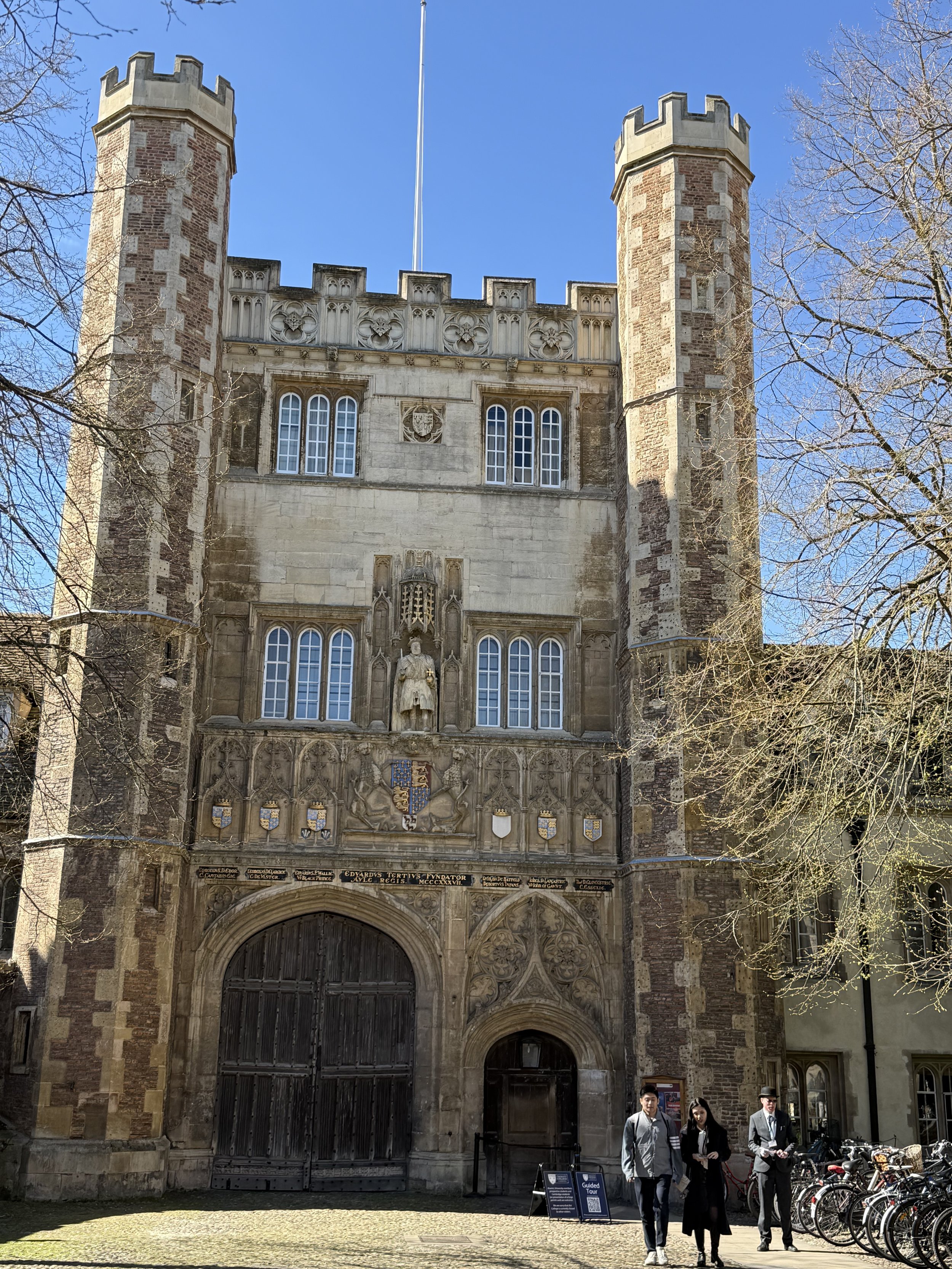
King Henry VIII wasn’t just famous for his six wives. He founded Trinity College in 1546, merging two smaller colleges, King’s Hall and Michael House to create the largest and most prestigious college.
Henry VIII’s break from Rome and the creation of the Church of England directly affected the university’s curriculum and governance. The theology teaching shifted from Catholic scholasticism toward Protestant thought.
Many Cambridge scholars, such as Thomas Cranmer, Hugh Latimer, and Mathew Parker became key figures in the English Reformation.
If you walk around Cambridge now, you can still spot lots of Tudor buildings, look for red bricks, carved gates, and crests of kings and queens.
So even though the Tudors lived hundreds of years ago, their stories and ideas are still part of Cambridge today.